
A Child’s Innocence and Its Cost
The Man Who LaughsThe book contrasts children’s instinctive mercy with the adults and institutions that turn vulnerability into a resource or a threat.
increasing Bearing strength in each event
 decreasing
Bearing strength in each eventdecreasingThe Comprachicos’ Child
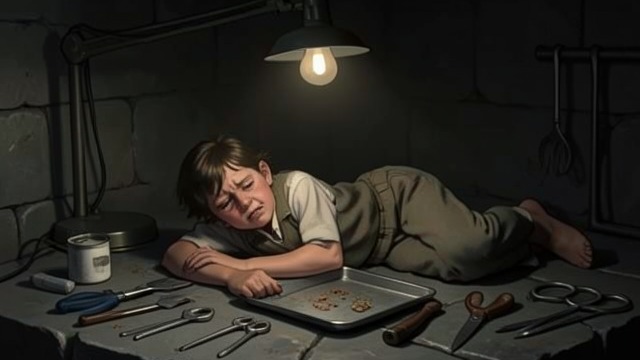
The Comprachicos’ Child
Childhood exploited
Gwynplaine is sold and surgically altered while too young to understand.
Adults decide his face and future for profit and policy.
Innocence gives him no protection from calculated violence.
Memory withheld
The operation leaves no clear memory for the child.
His later life is built around effects he cannot explain.
The missing knowledge deepens the injury to his identity.
A Child Saves a Child
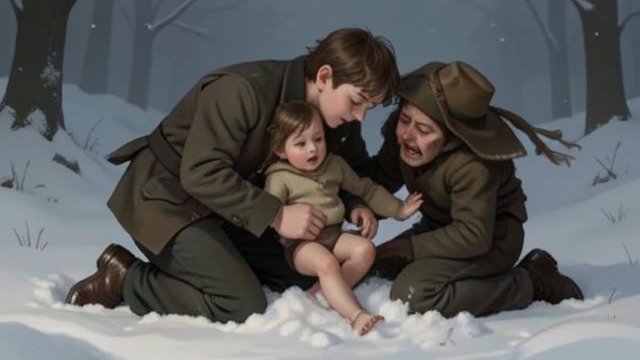
A Child Saves a Child
Instinctive mercy
Gwynplaine hears Dea beneath the snow and rescues her.
He does not ask who she is or what she can give him.
His action opposes the adults’ commercial and political cruelty.
Vulnerability shared
Both children are abandoned and nearly helpless.
Gwynplaine accepts a heavier burden when he takes Dea in his arms.
Childhood becomes a source of courage rather than weakness.
A Promise of Care
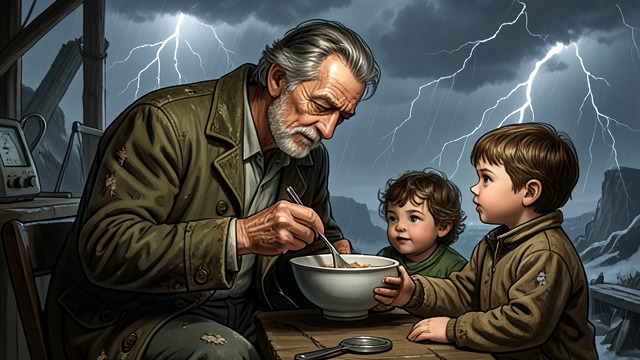
A Promise of Care
An adult chooses compassion
Ursus welcomes the two children despite poverty and inconvenience.
He feeds them and makes room in his household.
His grumbling voice cannot conceal the care of his actions.
Innocence protected
The children sleep safely while the storm passes.
Homo’s quiet presence completes their temporary sanctuary.
Their survival depends on adults who choose kindness.
A Child Among the Peers
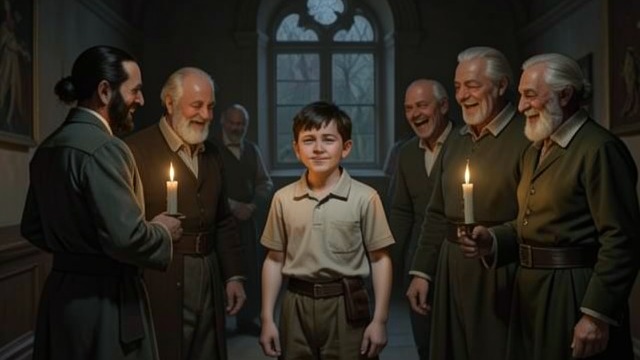
A Child Among the Peers
The past recalled
Gwynplaine describes his abandoned childhood to the assembled lords.
He asks them to notice children harmed by poverty and policy.
His personal history undercuts the chamber’s abstractions.
The old are not moved
The peers laugh at the speaker and his face.
The difference between childhood need and adult privilege remains intact.
Innocence becomes testimony that the powerful refuse to hear.
A Future Unlived
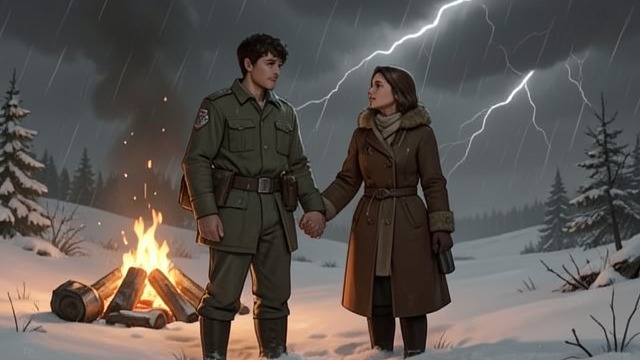
A Future Unlived
Hope of ordinary life
Gwynplaine imagines that he and Dea can marry and earn their bread.
Their dreams are modest beside the wealth he has inherited.
The prospect restores the value of an ordinary shared future.
Childhood’s long shadow
Dea dies before that future can begin.
Gwynplaine’s final loss recalls the precariousness of their first survival.
The novel closes on innocence preserved in love but unprotected from death.
Around age two, before the Portland voyage
During the snowstorm of January 29, 1690
In the first night inside Ursus’s van
During Gwynplaine’s speech in the Lords
After Gwynplaine and Dea reunite aboard the Vograat
